
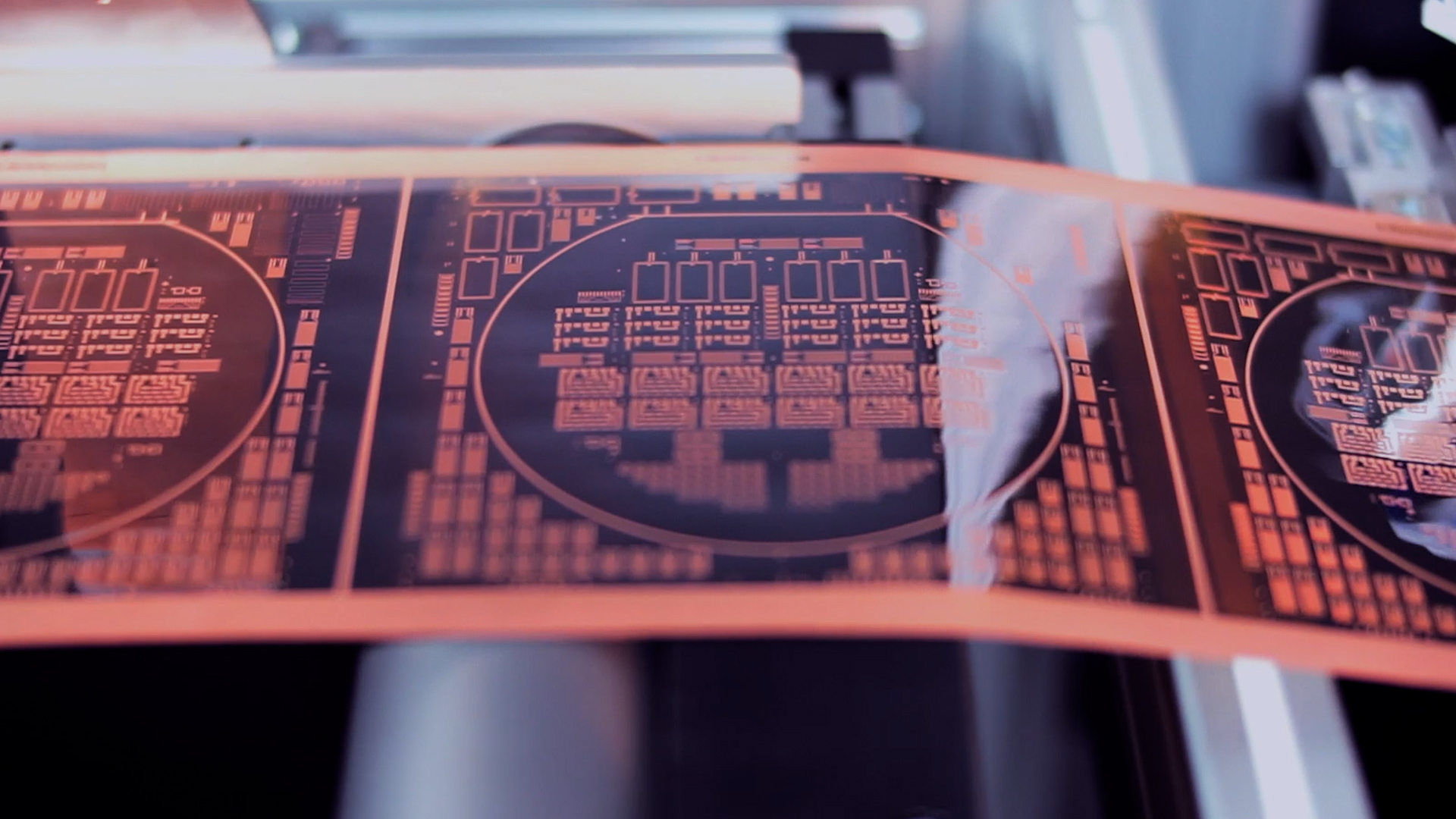
What are the Challenges in manufacturing flexible Electronics?
The manufacturing of flexible electronics poses fundamental challenges for many production environments. Thin, delicate substrates are highly sensitive to mechanical stress, temperature, and process variations. At the same time, demands for precision, throughput, and reproducibility are constantly increasing. In practice, this often leads to unstable processes, increased reject rates, and limited scalability. Typical problems encountered in practice include:
- Unstable processes with thin materials
- Warping, material movement, or inaccurate positioning
- High yield losses due to defective structures, especially with fine conductive patterns or microstructures
- Inadequate process control
- Mechanical methods quickly reach their limits when dealing with delicate structures
- Difficult integration into existing production lines, particularly in roll-to-roll or sheet-fed processes
In these sectors in particular, the reliable scaling of processes is becoming increasingly crucial:
- Automotive (e.g., interior sensors)
- Wearables & Smart Textiles
- Flexible Displays
- Medical Technology (e.g., sensor films)
Our solution: automated
laser micro machining for flexible Substrates
To reliably master these challenges, a machining process is needed that operates without mechanical stress while delivering the highest precision.
This is precisely where laser micro-machining comes into play. It enables stable, reproducible patterning even on the most delicate materials, thereby laying the foundation for scalable processes in the manufacture of flexible electronics. This results in concrete advantages in the production process:
- Laser drilling, cutting, and texturing in a single system
- Non-contact & burr-free processing with no tool wear
- No mechanical stress on the material
- Clean edges and defined textures
- High repeatability
- Flexible adaptation to designs and layouts
Especially in:
- Thin films
- Polymer substrates
- Coated materials
- Conductive paths and functional layers
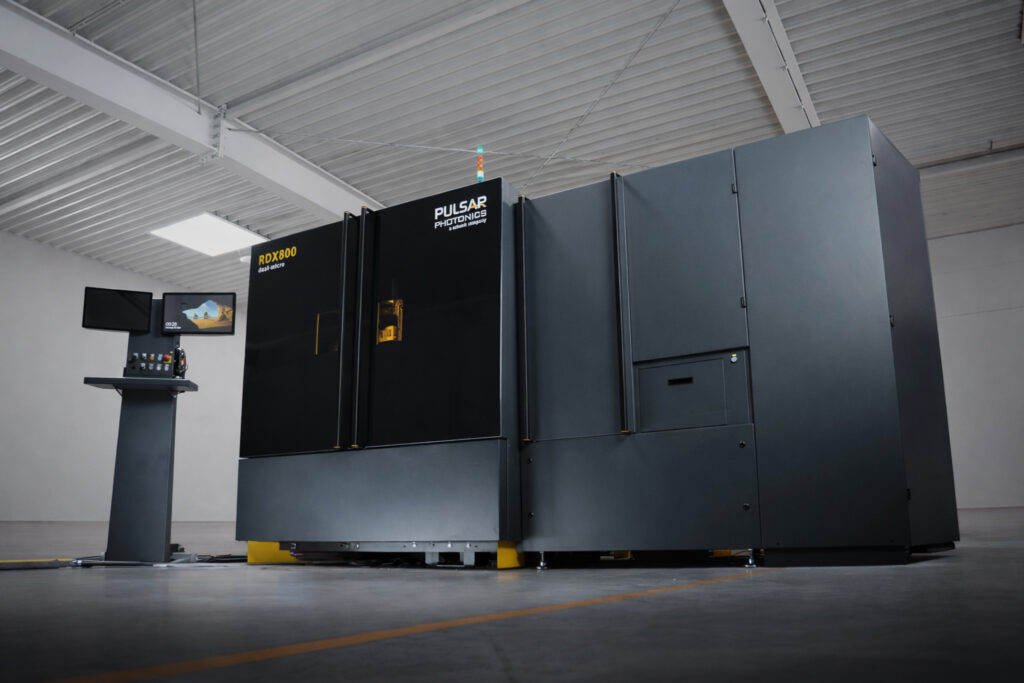
Machine solution:
RDX800 automatic For maximum process stability
The RDX800 automatic is a highly automated laser micro-machining system with an integrated robot and roller system, designed specifically to meet the demands of industrial manufacturing for flexible electronics:
- Stable process for moving and delicate substrates
- Process control: Maximum throughput through inline monitoring
- 100% traceability and audit trail
- Flexible integration into existing production lines (roll-to-roll, roll-to-sheet, sheet-to-sheet, stand-alone, or line integration)
- Fully automated parts handling for maximum productivity
- Laser drilling, cutting, and structuring in a single system
- Multi-process capability reduces space requirements and costs
- Intuitive and user-friendly software for generating CAM toolpaths
- Complex machining tasks without programming knowledge
- Easy import of DXF files
The Key benefits of automated laser processing on the RDX800 automatic

Quality
Even the finest structures are reproducible without tool wear or material distortion

Process Diversity
Structuring, drilling, and cutting in a single system
AUTOMATIOn
Automated processing for continuous production: roll-to-roll, roll-to-sheet, and sheet-to-sheet processing

Process stability
Zero defect rate through inline monitoring, 100% product and process documentation, and traceability
Materials &
Applications
Suitable for a wide range of flexible Substrates
The requirements for manufacturing flexible electronics vary depending on the material, layer structure, and application.
A key challenge lies in processing different substrates and functional layers with consistent quality, without having to reconfigure the process each time.
The RDX800 automatic is specifically designed for this purpose and enables precise machining of a wide range of typical materials and applications:
- Polymer films (e.g., PI, PET)
- Thin metal films
- Coated substrates
- Functional layers (e.g., conductive or sensor-based)
- Pattern formation of conductive paths
- Separation and singulation of components
- Drilling of microstructures
- Processing of sensor films
- Precision machining of printed electronics
- Additional materials for medical technology, the automotive industry, wearables, and consumer electronics
Our Products & Services
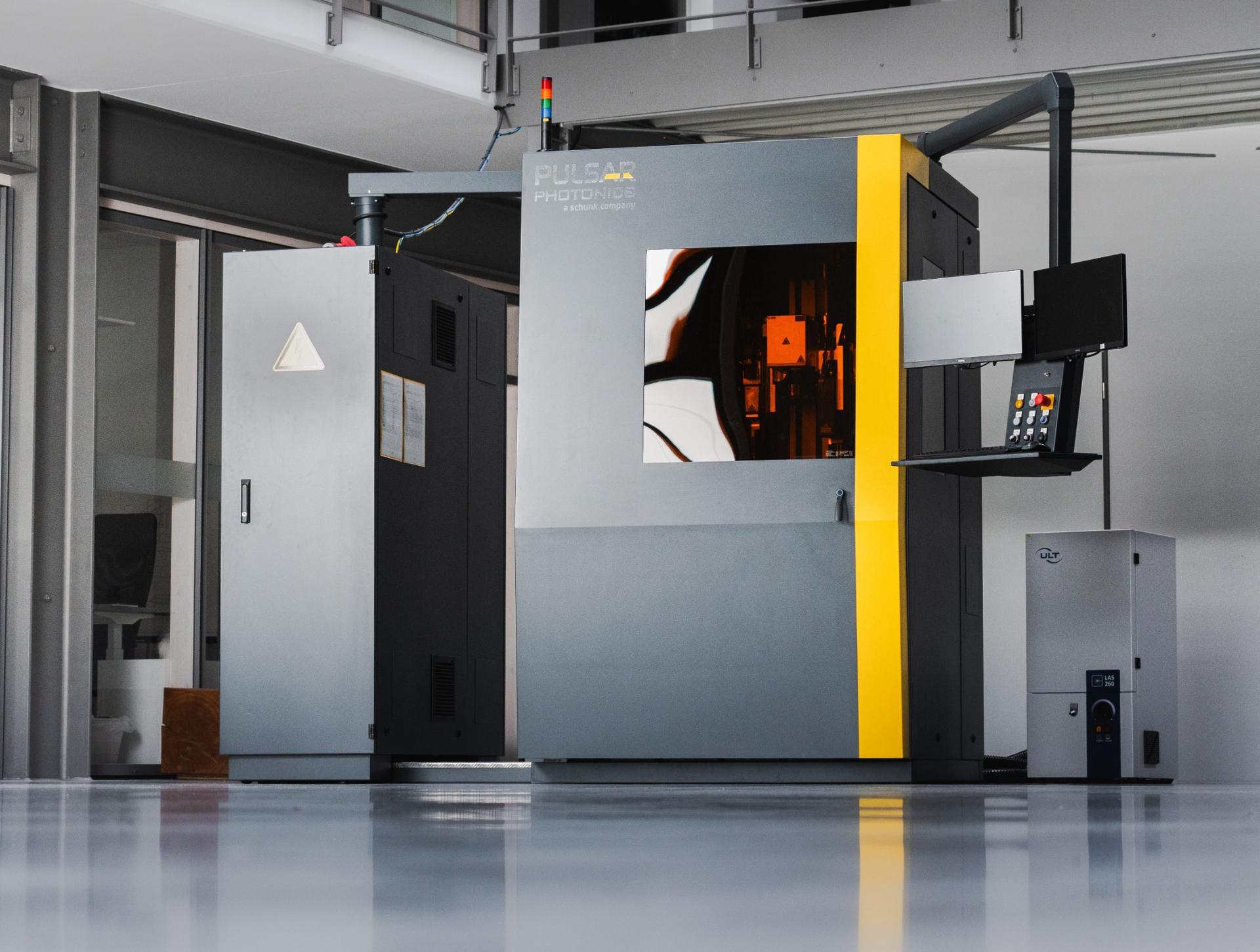
Laser Machines
Mechanical engineering for laser material processing. State-of-the-art laser systems for custom manufacturing and automated mass production.
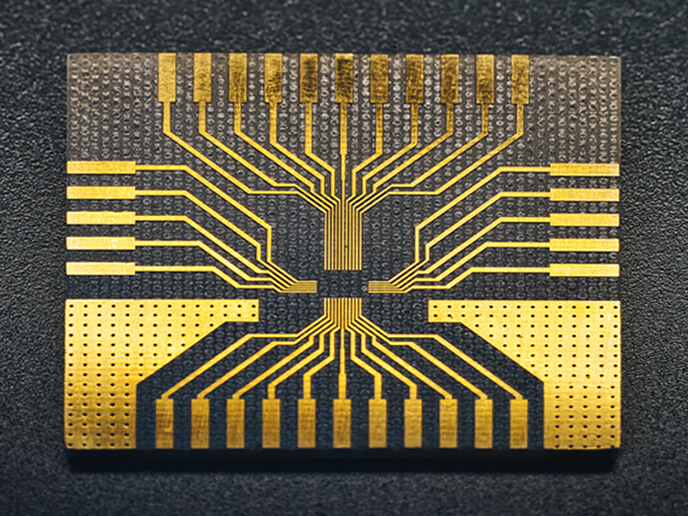
Laser Contract manufacturing
Component manufacturing and machining using ultrashort-pulse lasers. Feasibility studies, process development, and contract manufacturing through to series production.
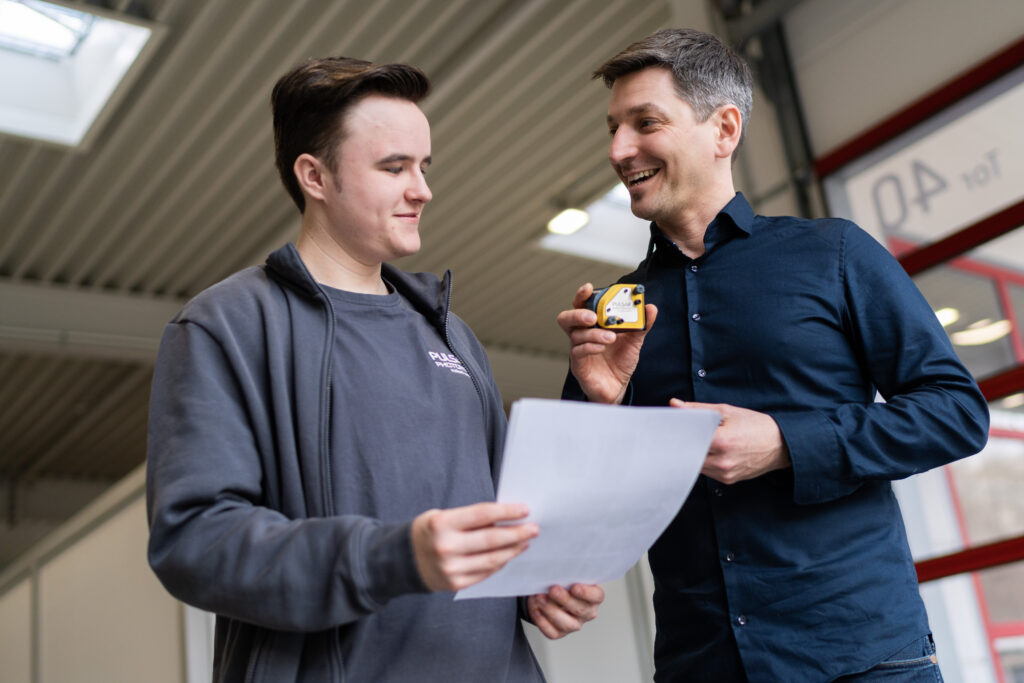
Feasability studies & Process development
At the Pulsar Laser Application Center, structural geometries and machining processes can be developed and tested in collaboration with clients.
- Feasibility studies for new applications
- Development and optimization of complex geometries
- Tests using actual components and materials
- Assessment of quality, precision, and process stability
- Process validation prior to mass production
You have a question about a product?

Your Contact Person for sales
Louisa Draack
Technical sales
The company: Why choose Pulsar Photonics?
- Extensive experience in laser micro-machining
We have extensive experience in developing industrial laser processes for precise microstructures and holes in a wide variety of materials - Development, automation, and systems engineering from a single source
From process development to the finished automated production system, we support our customers every step of the way toward industrial implementation - Process development in our own laser application center
New applications and components can be tested in our laser application center and further developed in collaboration with customers - Solutions for industrial series production
Our systems are specifically designed for stable processes, high-volume production, and integration into automated production environments
