Mass precision laser drilling of parts

Automated machining for series production
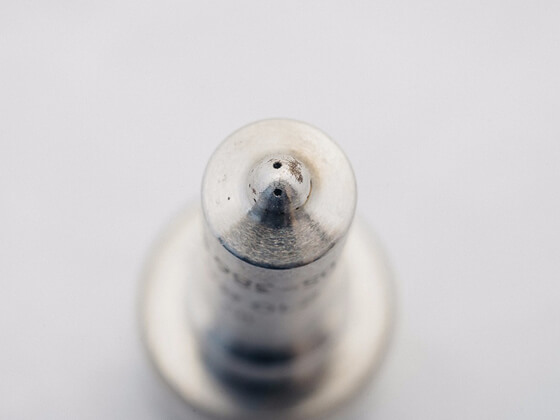
Mikrobohren Düsen - Laserbohren Düsen - Laser drillng nozzles - Ultrakurzpulslaser

What are the challenges in micro drilling parts for series production?

Precise laser drilling of small parts becomes praticulary challenging when large quantities must be machined. In many manufacturing processes, parts are handled in bulk, which further complicates handling and positioning. Mechanical processes quickly reach their limits with very small drilling diameters. Tool wear, burr formation or unstable processes are potentially severe issues. The challenges in micro drilling of series parts include:

  • Very small drill diameters (3-500 µm): high process stability and precision requirements
  • High tool wear in mechanical drilling causes downtime and rising costs
  • Burr formation or damaged edges lead to scrap
  • Complex handling and positioning of workpieces
  • Difficult automation for very small parts
  • Varying drilling quality at high production numbers
  • Quality assurance in the production process
  • Realization of product variants: variation of drill diameters and placements complicate processes and can require retooling of the machine
  • Unsorted parts at high production volumes

Our solution: Automated laser precision drilling of small parts in series

Laser based manufacturing enables a new kind of process safety: micro drilling can also be automated in “unsorted parts”, enabling reproducible and economical manufacturing.

  • Nonwearing tooling, contactless and burr-free
  • Laser processes with extremely high resolution
  • Automated feeding of workpieces for a continuous series production
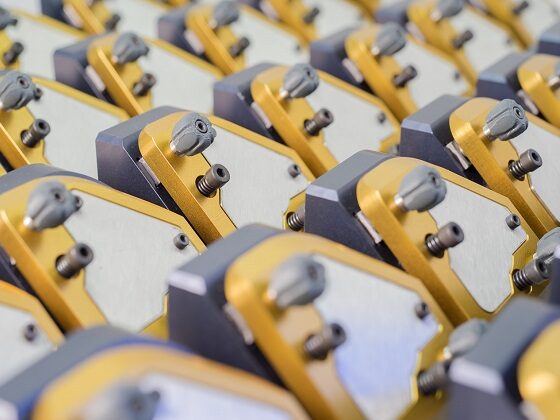
  • Singulation & precise positioning of small parts
  • Handling solutions adapted to specific parts
  • Highly reproducible laser processes
  • Up to 100% parts inspection in the production process
  • Stable process quality
  • Easy integration with automated manufacturing lines
  • Digital process chain, easy adaptation

Your advantages with automated precision laser drilling of small parts

Qualität
Quality

High precision even at very small drilling diameters down to the single-digit µm-range

Process safety

Consistent drilling quality across large quantities and long production runs using digital manufacturing processes

Wirtschaftlichkeit
Economy

Fewer rejects thanks to precise, automated, and controlled machining. Minimal downtime

Produktion
Integration ability

Automated, scalable processing of bulk materials with a bin-picking singulation function

Machine Solution:
Singulation & Automated laser machining in series

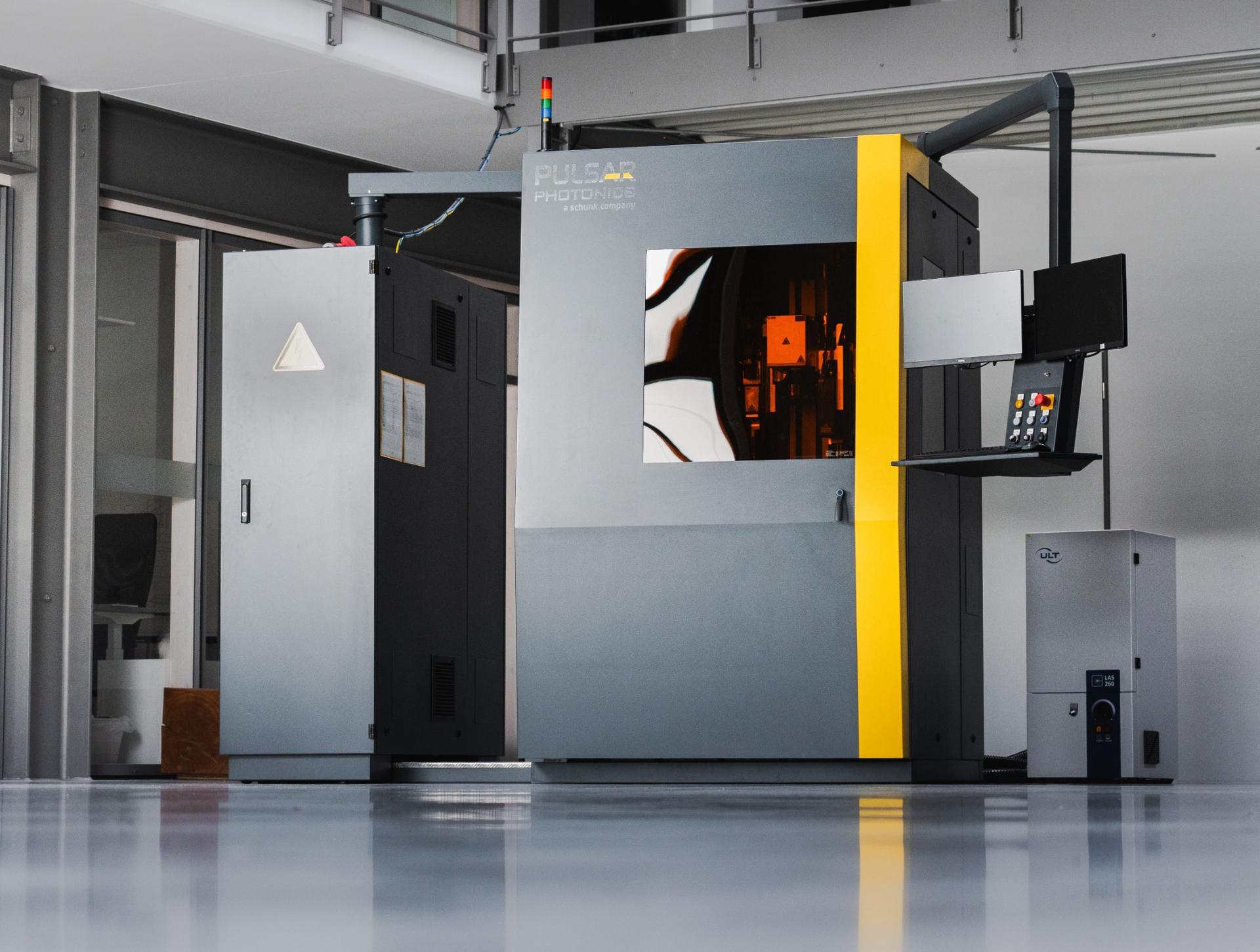
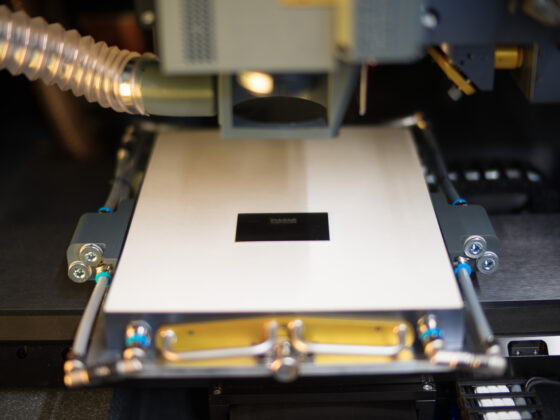
Pulsar Photonics has developed the P1000 automatic for automated machining of small parts. The machine is specially designed to machine small parts fed in as bulk material and to economically create micro-drillings in large quantities. The combination of automated feeding, precise positioning and stable laser machining creates a continuous process from singulation to the finished borehole.

  • Machine availability around the clock
  • Up to 100% parts certification
  • Application-specific software solution
  • Continuous monitoring of machining parameters
  • automated feeding and singulation of bulk parts and bin-picking
  • precise positioning of parts

Using the example of laser drilling of brass tubes with a QCW laser, the following values can be achieved:

  • Up to 300,000 parts per day
  • < 0.2 % rejects
  • down to 0.5 ct process cost per part

Typical Parts For precision laser drilling

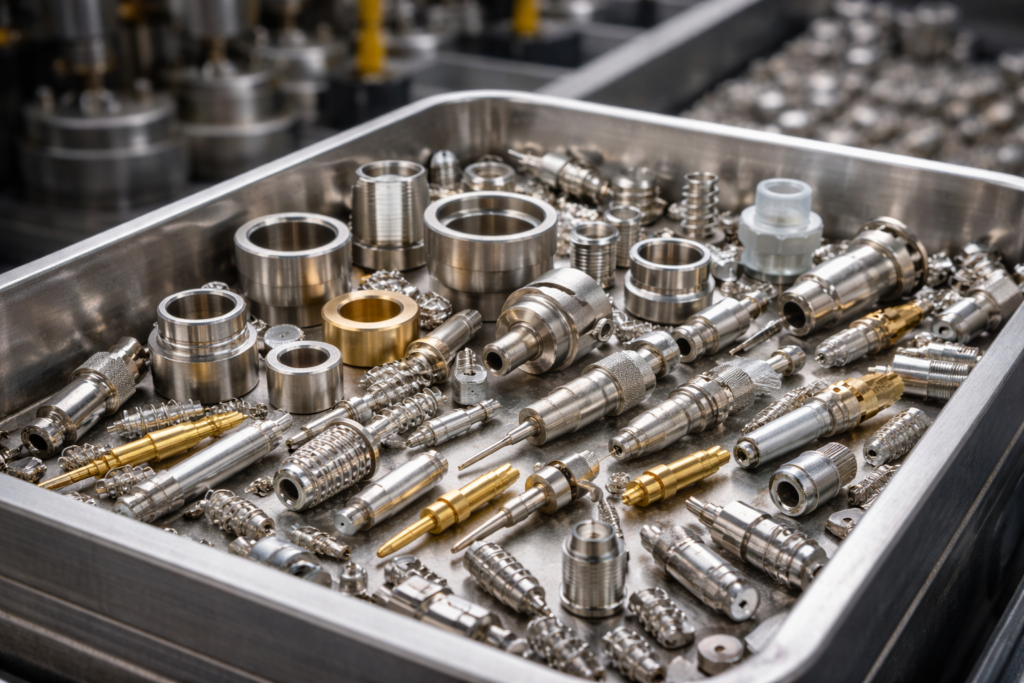
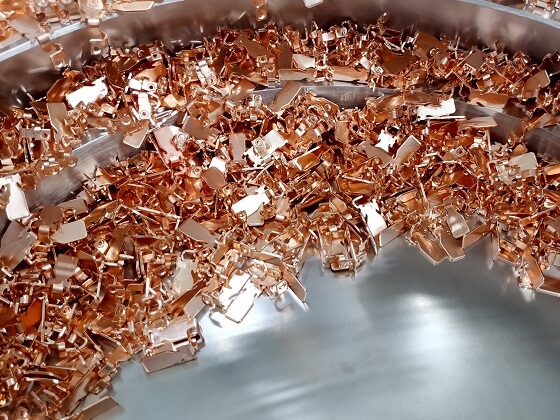
  • Small rotationally symmetric metal parts
  • Cylindrical precision parts
  • Sleeves and thin-walled metal parts
  • Stampings and bent components
  • Contacts and connecting elements
  • Small functional parts with microdrillings
  • Small medical components
  • Injection moulded parts for electronics or medical technology
  • Contact pins
  • Micro-sleeves
  • Nozzles
  • and more
Schüttgutbearbeitung, Serienproduktion

Our Products & Services

Laserbohranlage, RDX2Drill

Laser Machines

Machine construction for laser material machining. Modern laser machines for single-item and series production.
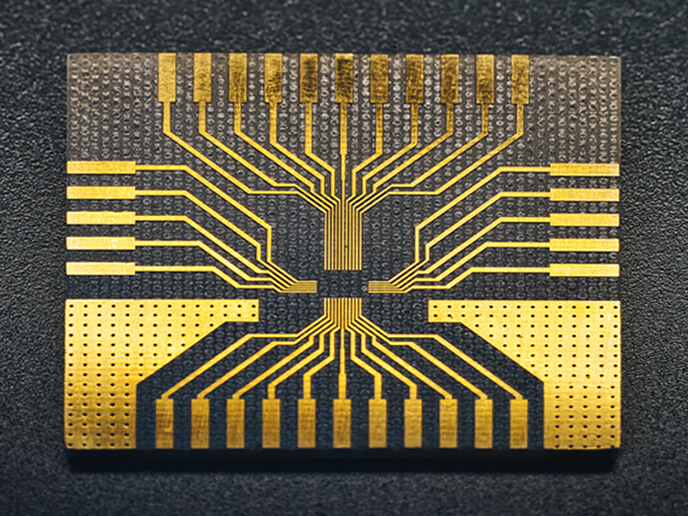
Laser Auftragsfertigung

Laser Contract Manufacturing

Component manufacturing & machining with ultrashort pulse lasers. Feasability studies, process development and contract manufacturing through to series production.

Duales Studium, Bechelor of Engineering, Physik, teampulsar, Pulsarkarriere, Pulsar Photonics, Aachen, Fachhochschule, Verlautenheide, Präzisionstechnik, Anlagenbau, Systemtechnik, Auftragsfertigung, Lasertechnik, Studieren

Feasability Tests & Process Development

Along the path to the production machine, parts, applications and processes are developed and tested at the Pulsar Photonics laser application center in close cooperation with the customer. On the basis of real parts, laser processes are analyzed and optimized. under real-world conditions.

  • Feasability analyses for new applications
  • Development and optimization of laser processes
  • Tests with real components and materials
  • Assessment of quality, precision and process stability
  • Validation of production processes before series integration

Do you have a question about a product?

Louisa Draack, Technischer Vertrieb, Pulsar Photonics, Auftragsfertigung, Beratung, Laser

Your Contact Person for sales

Louisa Draack
Technical sales

+49 (0) 2405-49504-20
machines@pulsar-photonics.de

The Company: Why Choose Pulsar Photonics?
  • Extensive, long-term experience in laser micro machining
    We have comprehensive experience in the development of industrial laser processes for the creation of precise micro structures and drilling microscopic holes in diverse materials
  • Development, automation and machine engineering – all from a single source
    Starting with process development and reaching all the way to the finished automated production machine, we accompany our customers every step of the way towards industrial implementation
  • Process development at our in-house laser application center
    New applications and workpieces can be tested at our laser application center and further developed in cooperation with customers
  • Solutions for industrial series production
    The machines are specially designed for stable processes, high volumes and an integration into automated production environments

Scroll to Top

CW/QCW fiber laser

Industrial grade fiber laser with up to 3 kW average power (IR)

  • available wavelengths: IR
  • Pulse duration: CW (continuous wave), QCW (µs-ms)
  • Repetition rate, pulse duration and beam quality depending on the selected manufacturer

Helical drilling optics for precision drilling

Image source: Fraunhofer ILT

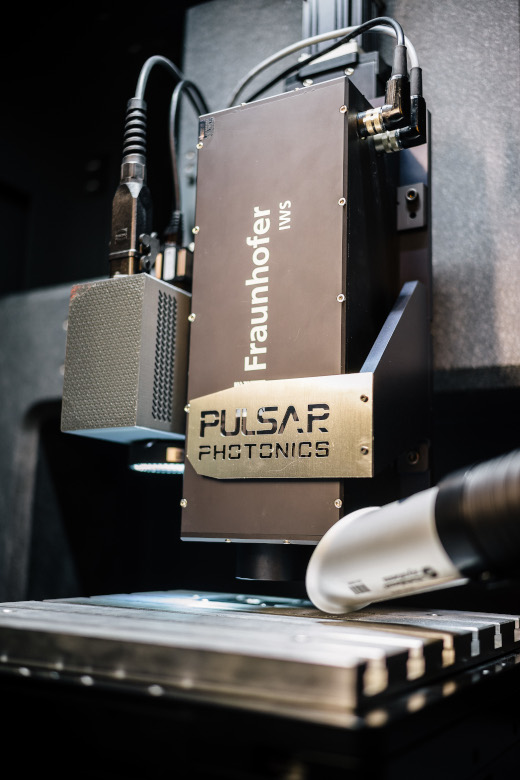
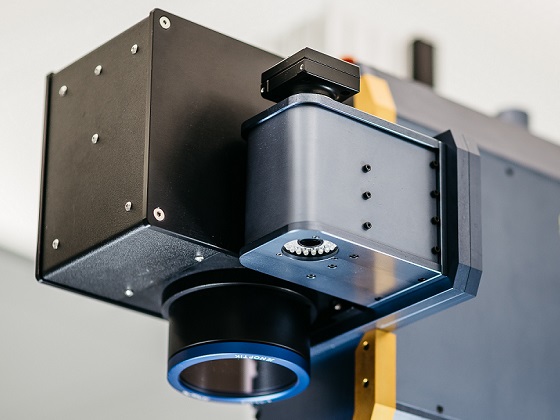
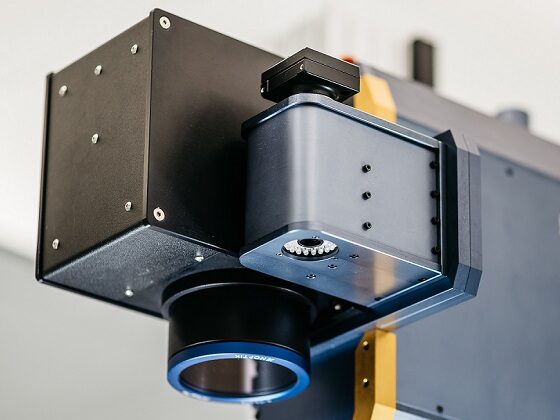
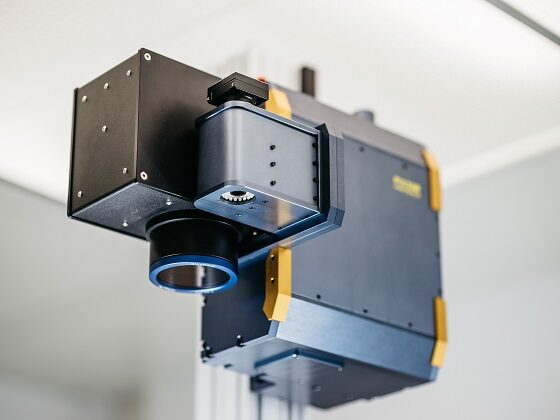
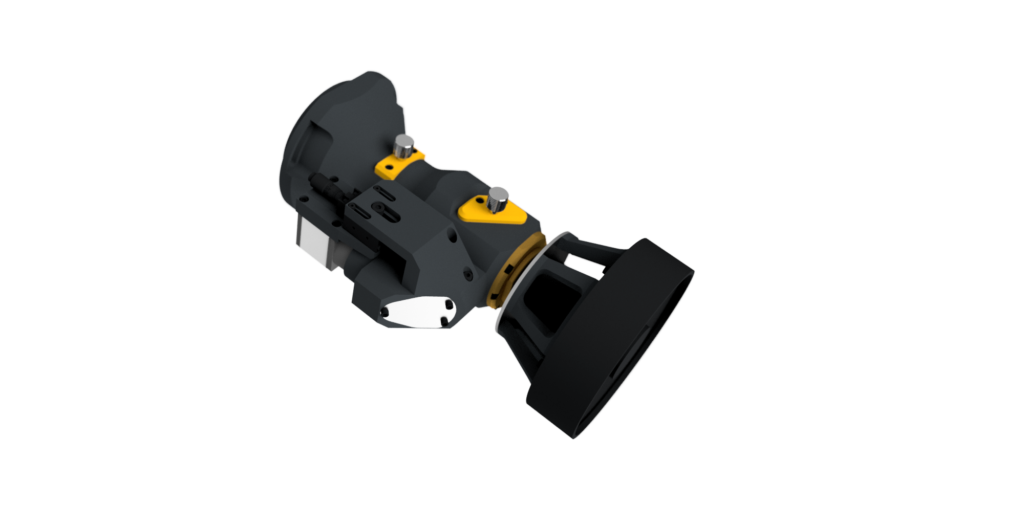
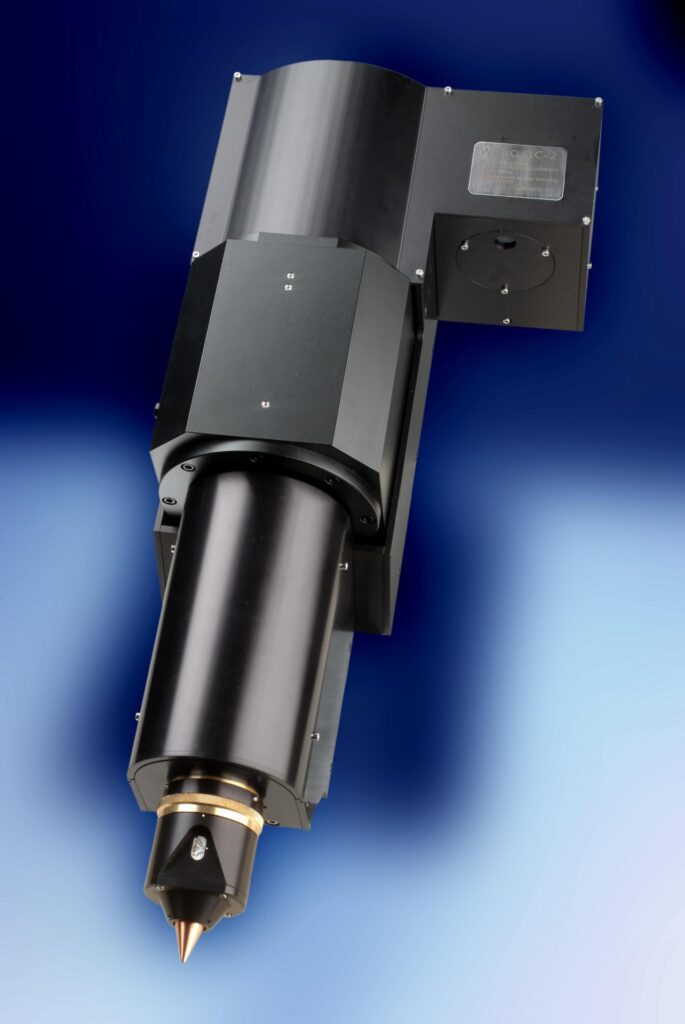
Processing head for precision drilling with high aspect ratios. The 2-part processing head facilitates integration even in small-format and standardized laser machines. The third generation of the helical drilling optics used (patent DE102005047328B3, 2006 Fraunhofer ILT) enables the laser beam to rotate quickly on the drill circle path. At the same time, the laser beam is set in rotation and impresses with its optical translation and operation at moderate speeds. In combination with an XYZ axis system, all drilling geometries can be implemented or precision components can be cut.

Materials and applications:

  • Drilling & precision cuts
  • Smallest and ideally round holes with a diameter from 20 µm
  • Burr and beard-free cut edges, drill holes without edge removal
  • Processing of metals, ceramics, multilayer systems and plastics
  • Integrated coaxial observation
  • Wavelengths: UV, VIS, IR
  • Process proof for aspect ratios> 1:30
  • Adjustable taper
  • Adjustable borehole diameter

Direct laser interference patterning (DLIP) - Head

Processing head for nano-structuring surfaces through multi-beam interference processing. With Direct Laser Interference Patterning (DLIP) surfaces can be efficiently nano-structured and thus functionalized. Applications are anti-icing structures, structures that change wetting, antibacterial surfaces and tribological surfaces.

  • Number of interfering beams: 2, 3 or 4
  • Type. Wavelengths: 355nm, 532nm
  • Type. Period of the interference structure: 700nm-5µm
  • Laser processing with fixed optics using an axis scanner

Sie sehen gerade einen Platzhalterinhalt von Standard. Um auf den eigentlichen Inhalt zuzugreifen, klicken Sie auf den Button unten. Bitte beachten Sie, dass dabei Daten an Drittanbieter weitergegeben werden.

Weitere Informationen

USP laser (20W)

Industry-standard ultrashort pulse laser with up to 20 watts average power (IR)

  • available wavelengths: UV, VIS, IR
  • Repetition rate, pulse duration and beam quality depend on the manufacturer selected

USP laser (100W)

Ultra-short pulse laser suitable for industrial use with up to 100 watts average power (IR)

  • average power: typ. 100W IR
  • Pulse energies: up to 2mJ
  • available wavelengths: UV, VIS, IR
  • Pulse duration range: 300 femtoseconds to 15 picoseconds
  • machine-integrated laser monitoring
  • specialized safety equipment
  • Repetition rate, pulse duration and beam quality depend on the manufacturer selected

USP laser beam sources have experienced an enormous scaling of the average laser power in recent years. In the research environment, beam sources with more than 1,000W are already available here. In fact, the integration of these beam sources presents the integrators with numerous challenges for safe operation, optical quality, availability, control and peripheral equipment of the machine. Pulsar Photonics has many years of experience in the power scaling of processes, necessary system technology and qualification of USP beam sources above 100W and developed machines for well-known laser institutes.

NAnosecond laser (100W)

Laser

Industrial short-pulse fiber laser with up to 100 watts average power (IR)

  • available wavelengths: IR
  • Repetition rate, pulse duration and beam quality depend on the manufacturer selected

Photonic Elements (Machine control)

  • Modular system for controlling different hardware components such as
    • Machine axes, scanning systems, lasers
    • Sensors and actuators
    • Vision systems, measurement technology
    • PLC, security systems, I / O interfaces
  • Job editor with scripting (C #, Visual Basic) for creating your own processes and complex machining programs
  • Integrated CAD module for creating models, etc.
    • Geometries
    • Fonts, serial numbers
    • Barcodes
  • Integrated measurement and control technology
    • for component measurement
    • Registration mark detection
    • automatic scan field calibration
    • Laser power control
  • Sensor grid with database connection for the evaluation and visualization of data
  • Data streaming for executing large job files
  • Production data acquisition
  • Control panel
    • User level
    • Logging
    • Software update function
    • remote maintenance

Further information

Photonic Vectors (CAM software)

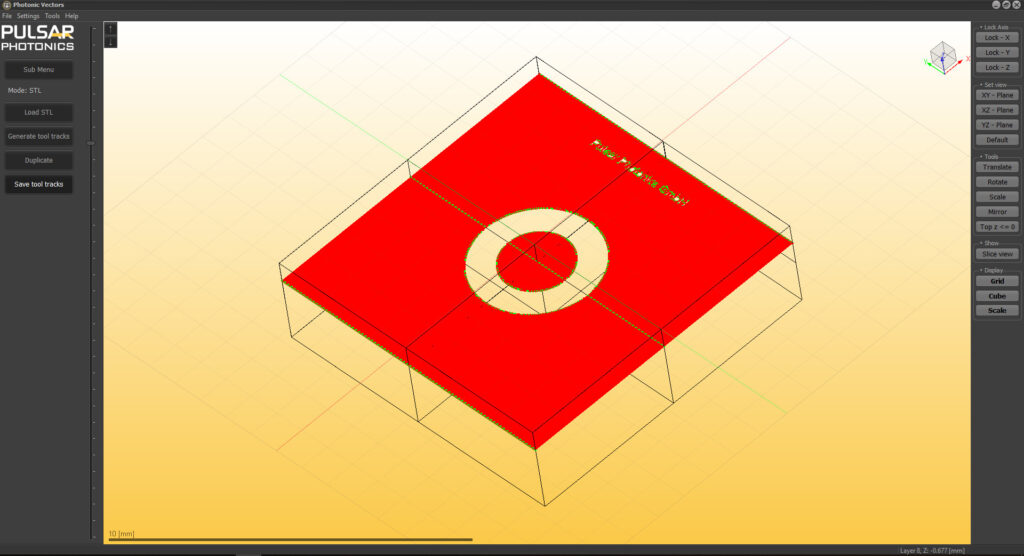
Pulsar Photonics uses its own high-performance CAM solution to prepare machine and vector data (CAM data) for 2.5D laser processing PhotonicVectors . The software with a graphical user interface allows volume models to be loaded, which can then be broken down into layers, scan vectors and axis infeeds in line with the process. As a result, the user receives a finished job file that can be loaded directly into the PhotonicElements machine software and executed there. In addition to a large number of basic settings for 2.5D laser structuring, the following functions are suitable for your application:

  • Slicing: Decomposition of the volume model into individual layers. Input of the number of layers into which an ablation volume is to be divided in the z-direction
  • Hatching: Hatching of each layer with scan vectors. Input of the hatching with which a layer is to be filled; including hatching spacing, direction, randomization, etc.
  • Contouring: Edge cuts with parallel offset to the outer contour. Input of the edge cut with which the outer contour is to be worked out; including distance, number and position
  • Tiling / stitching: Automatic division of the target geometry into processing fields of variable sizes. Randomization of the processing fields for quality optimization in multi-layer processing.
  • Intelligent tracking: automatic (re) sorting of scan vectors to reduce jump times.

Further information

BEAM POSITION STABILIZATION

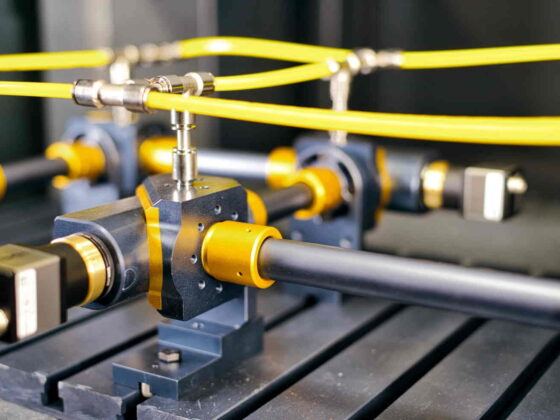
Iterative control of the beam position to a target value to compensate for the drift of the beam position of a laser beam source. The beam position is measured by two camera systems integrated in the beam path, the manipulation of the beam position by two motorized beam deflectors. The control is triggered, for example, by the user or a software command

  • 2 mechanical beam deflectors (M5 mounting, incl. Posts and T-slot adapter) with 2 stepper motors each (stroke> 10mm, resolution 1.25µm); Incl. Mirror substrate D1 "
  • 2 mechanical beam deflectors (M5 mounting, incl. Posts and T-slot adapter) each with 1 inline camera (CMOS, 2 MPixel); Incl. Mirror substrate D30mm
  • Stepper motor controller, 19 “rack; for controlling the stepper motor actuators
  • Software module for outputting camera data and controlling the stepper motors for beam position stabilization.
  • API interface for the output of camera data and selected measurement data

CAMERA SYSTEMS

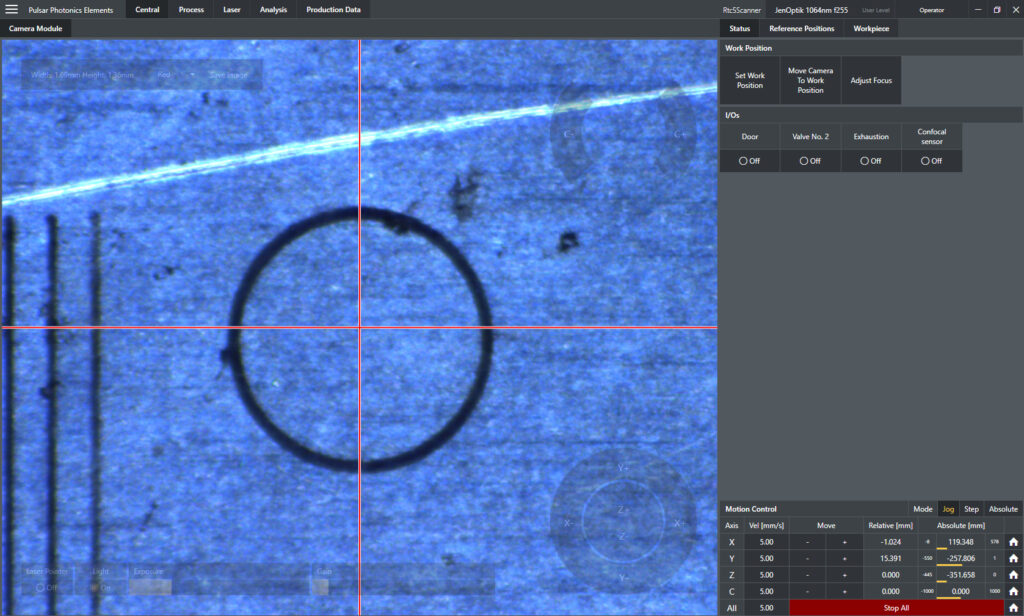
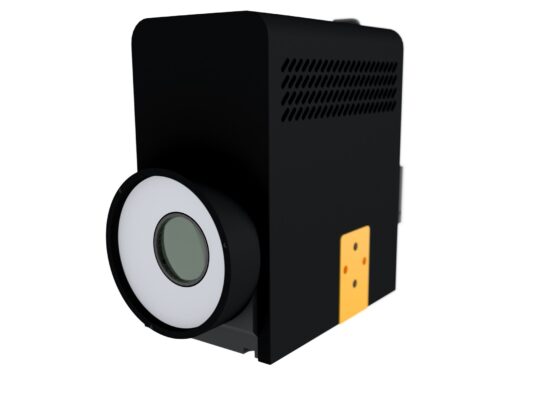
The system camera CM-R2 expands the conventional processing head with an imaging component for workpiece positioning and quality control. The fast and hands-free positioning of the workpiece is made possible by the integrated laser pointer. This marks the current position of the camera image on the workpiece surface in a clearly visible manner for the operator. At the same time, the laser pointer can specifically support monochromatic image evaluation.

  • LED ring field lighting
  • Integrated coaxial laser pointer,
  • Auto focus function;
  • Detection of the position of simple geometries such as circles, crosses, registration marks in the camera image using software features
  • Software routine for measuring distances and circle diameters

Condition Monitoring

The Condition Monitoring System (CMS) consists of various sensors and actuators that can monitor and regulate machine states.

The range of services of the CMS includes:

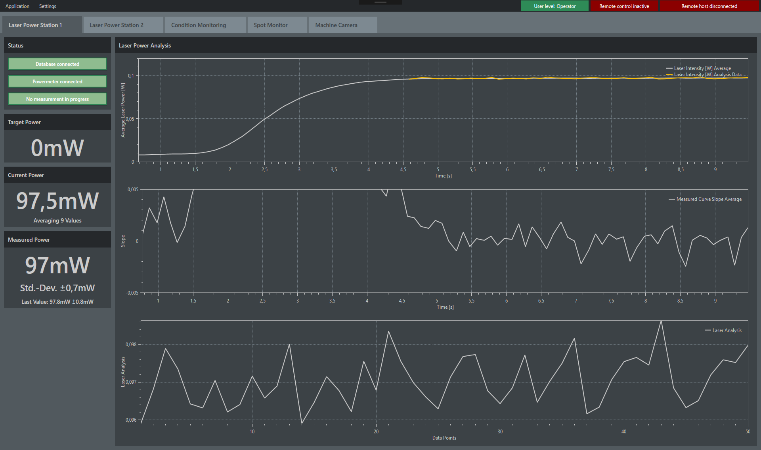
  • Monitoring and regulation of the average laser power with a thermophilic power sensor
  • Active beam position stabilization
  • Monitoring of ambient and installation conditions such as temperature, vibrations
  • Measurement of the spot geometry with large average powers

The data can be visualized and processed with the PhotonicAssist software.

TOPOGRAPHY MODULE

Machine-integrated measuring technology for the measurement of components directly in the machine after processing

  • Point and line measurement (TM-R1) or
  • Surfaces measurement (TM-R2)
  • Axial resolution <100 nm

TM-R2: Area-measuring 3D topography measuring device mounted on an additional, separate Z-axis with 100 mm travel

  • Stitching function
  • Working distance approx. 4.5 mm
  • Lateral resolution <2 µm
  • Image field approx. 850 µm x 650 µm

The measured data can be found in the software PhotonicsSurfaces be evaluated. The software PhotonicSurfaces enables the export of the measurement data in ASCII format (point cloud format).

POWER METER

Control of the laser power via an integrated power sensor at workpiece level for USP laser radiation of the wavelengths IR + VIS and up to an average laser power of 350 W.
Iterative control of the power of a laser system to a target value based on the measured values of a power sensor. System parameters depending on the laser beam source used.

Rotary SWIVEL UNIT

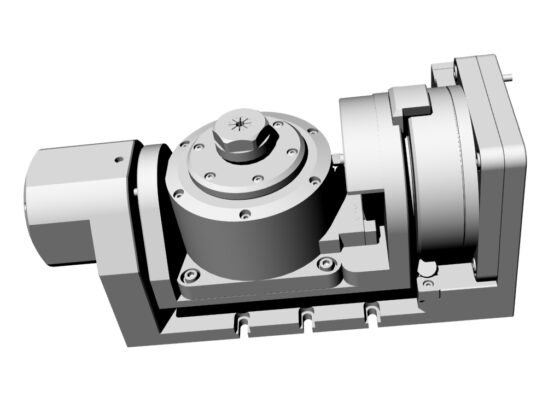
Rotary swivel unit for positioning cylindrical or 3D components under the processing head. Customer-specific designs are possible, for example a simple rotary axis for machining cylinders or a rotary swivel unit for complete freedom of 3D positioning.

TOUCH PROBE SENSOR

Precision button for tactile determination of the focus position and automatic focus position adjustment

  • Measuring range> 12mm,
  • Resolution <3 µm

Software-based component of the Tool Center Point Management for easy switching between different tool positions. Optional: 3D measuring probe

WORKPIECE CLAMPING DEVICE

Depending on the components used, various fixings can be used, for example

  • Vacuum clamping systems for fixing flat components such as wafers in particular.
    The fixation takes place by negative pressure on a porous ceramic plate
  • Zero point clamping systems for flexible, fast and extremely precise retooling of workpieces, clamping devices or devices
  • Application-specific clamping systems

SUCTION SYSTEM

suctions system

Powerful extraction and filter system for capturing the laser smoke and the ablated particles in the immediate vicinity of the process zone.
Equipped with an activated carbon fine filter and an extensive PC interface, the machine control regulates the switching on and off and the monitoring of the suction.
The filter system consists of an add-on device with several filter stages and simple cassette handling.
Control elements and filter access on the front as well as via the software Photonic Elements

  • Max. Volume flow: 200 m 3 /H
  • Max. Negative pressure: 22,000 Pa
  • Nominal output: 160 / 6,500 m 3 / h / Pa
  • Optional: cartridge filter device

X-RAY PROTECTION

When using powerful USP laser beam sources, especially femtosecond lasers, for material processing, X-rays can arise in the ablation process from the area of the ablation zone. X-ray protection for the outside area of the facility is therefore mandatory.

All laser machines from Pulsar Photonics have a uniform machine design with sufficiently dimensioned material thickness and undercut sheet metal connections to safely contain the X-ray radiation inside the machine.

The additional equipment for X-ray protection includes a retrofit kit for the laser protection window and proof of protection. Pulsar Photonics checks the need for a retrofit kit for each machine configuration.

beam GUIdance

Guiding the radiation in the encapsulated free jet from the beam source to the workpiece.

In addition to the deflection units, further functions can be integrated:

  • Change of wavelengths
  • Switching different outputs
  • Expansion of the laser radiation
  • Polarization / polarization change
  • Laser shutter

Service 1

Call our customer hotline personal contact person ready for your inquiries. This is how we ensure our qualified availability and transfer your inquiries to the right and available technical staff.

We support you with general questions as well as with software support, process development or operator training. As an alternative to the hotline, our customers use the online ticket system for quick service inquiries.

There are no additional costs for using the customer hotline or the ticket system.
Maximize the availability of your system by having possible malfunctions remedied quickly and securely - with remote support (formerly Teleservice).

After your approval, our trained service experts switch to your system via secure remote access.

In this way, you benefit from a quick fault diagnosis and solution - without the need for a technician on site.

Service 2

With your service ID you receive support from the Remote support . Our service experts support you over the phone or, after your approval, get access to the machine control. You can continue to monitor and end the service on the machine yourself.

Since 2016, all RDX machines have video monitoring of the process zone. Training, practical assistance with programming, error diagnosis and process monitoring are technically easy.

Benefit from quick error diagnosis and resolution with remote support. You can maximize your machine availability cheaply and without on-site staff.

Remote support is billed directly to the workload or in quotas using your service ID.

Service 3

The commissioning of your laser machine, the machine relocation, laser technical measurements, training, a product change on the machine or the planned cleaning and maintenance on site.

Depending on the scope, material nature and service location, we send our specialists by train, service car or worldwide by plane.

Our service staff has many years of practical professional experience in laser technology, their own access to remote support and an extensive inventory of beam guidance components, laser optics, general consumables, tools or entire spare parts packages are available for use on site.

2D Processing head

2D scanning system for Scanning and Positioning in the working plane with high dynamics

  • Analog position detector or digital encoder
  • Position resolution 18/20 bit
  • Aperture depending on the total beam path (typ. 14 mm)
  • high long-term stability and linearity

3D Processing head

2D scanning system for Scanning and Positioning in the working plane with high dynamics
with additional optical focus shifter for dynamic variation of the focus position (3D scanning)

  • Analog position detector or digital encoder
  • Position resolution 18/20 bit
  • Aperture depending on the total beam path (typ. 14 mm)
  • high long-term stability and linearity

Multibeam scanner

Machine-integrated system for static Beam shaping or Multi-beam distribution in the working plane

  • Modular solution for the production of several laser foci in the processing level
  • Significant process acceleration in the production of periodic structures or for the parallel processing of the same components
  • Reduction of the processing costs through more efficient use of the available laser power

More information on the product page

FlexibleBeamShaper

Machine-integrated beam shaping system to generate freely configurable beam distributions.
Allows use as a photonic tool magazine with predefined beam shapes.
In addition, the FBS comes with a Galvanometer scanner equipped so that the generated intensity distribution can be scanned over the workpiece.
These combined tools in a single system open up new avenues in laser micromachining: faster, more flexible and more efficient .

  • Combination of flexible beam shaping system and scanning system
  • Software-based calibration and control of the system
  • Full machine integration for digitally changeable tools
  • Beam shaping with up to 100W laser power

More information on the product page

MicroScan Extension

Microscan-Extension MSE-G2

Easily integrated and powerful extension for every galvo scanning system.
By simply exchanging the lens for the MSE, the system can be expanded into a microspot scanning system and thus Focus diameter of less than 4μm can be achieved with an IR or VIS laser

  • Maximum dimensions (L * W * H): 245mm x 145mm x 120mm
  • Fastening thread: M85x1 (standard galvo scanner)
  • Scan field size: typ. 500μm * 500μm
  • Wavelength: IR (1030-1070nm) + VIS (515-532nm), UV
  • Spot size: 1-4μm
  • Working distance: 20mm (IR/VIS), 10mm (UV)
  • Integrated collision protection
  • For small laser powers

More information on the product page

Robot- loading

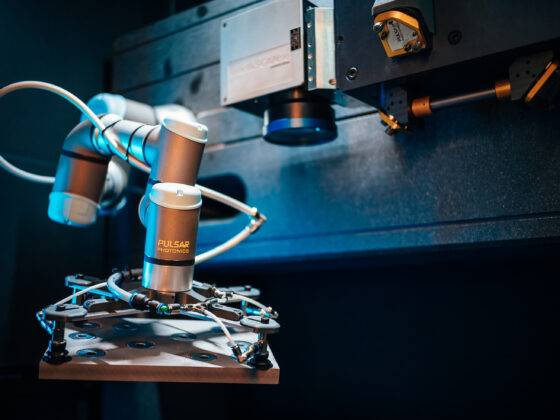
Integration of collaborative robots in or on the machine for flexible component processing, e.g. in the batch process for automated production

  • Holding force up to 3kg
  • Different fixation options, including mechanical, electromagnetic, pneumatic
  • Easy to use
  • Flexible adaptation to changes in the production environment

Roll-to-roll Machining

Roll-to-roll feed systems for the production of, for example, flexible printed circuit boards in combination with linear axis systems

  • 150mm - 500mm substrate widths
  • Materials: copper, polyamide, polyimide, thicknesses 25 µm - 1000 µm.
  • Web edge control
  • Vacuum clamping
  • Ionizers

Rotary indexing table

System consisting of

  • Vibratory conveyor with sorting bowl for correct positioning
  • Level monitoring
  • Rotary indexing table with quality control (sorting out of not ok parts)
  • Conveyor system
  • PLC control

USP Laser (20-50W)

Industrial grade ultra-short pulse laser with up to 50Watt average power (IR)

  • average power: typ. 20-50IR
  • pulse energies: up to 2mJ
  • available wavelengths: VIS, IR
  • pulse duration range: >10 picoseconds
  • machine integrated laser monitoring
  • specialized safety equipment
  • repetition rate, pulse duration and beam quality depending on selected manufacturer

Contact Newsletter