
Large-Scale Laser Machining
Cost-effective precision machining on large flat parts
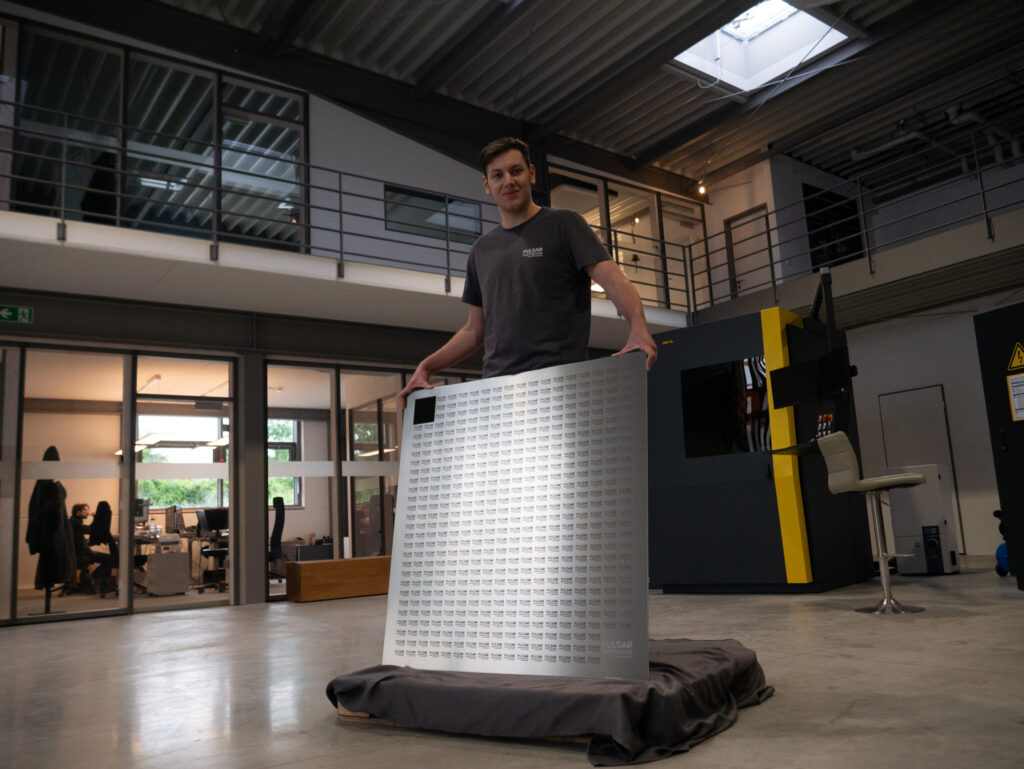
What are the Challenges involved in micromachining large surfaces?
Precise microstructuring of large-area components remains a major challenge in industrial practice to this day.
As soon as components exceed a certain size, traditional methods quickly reach their limits:
- Processes are too slow on large surfaces
- Mechanical methods cause wear and process instability
- Structures with micrometer-level precision on large surfaces are difficult to reproduce
- The material is difficult to machine (e.g., coating systems, glass, ceramics)
- Conventional methods such as chemical etching and/or post-processing hard chrome plating are not environmentally friendly or are subject to regulations (e.g., REACH)
- Thermal processes lead to warping or material damage
- Processing times increase disproportionately with the surface area
- Scaling from prototype to series production fails
- Processing is no longer economically viable
- High costs, low first-pass yield, and limited production capacity
As a result, many companies face a conflict of objectives:
High precision on a small area or extensive processing of a large surface area — it’s difficult to achieve both at the same time.
our solution:
large-area
laser micromachining
Laser-based micromachining has been established for years, though primarily on small surfaces. As components grow larger, machining times and process risks often increase disproportionately.
Large-area laser micromachining overcomes precisely this limitation: Through parallel processing and multi-beam machining, even large areas can be structured precisely, reproducibly, and cost-effectively without the typical drawbacks of conventional methods.
- Wear-free machining and consistent machining quality regardless of runtime
- Reduced maintenance and downtime costs
- Minimal thermal stress
- No cracking or material warping
- Highest precision regardless of surface area
- Reproducible results in series production
- Quick adaptation of designs without tool changes
- High process reliability even during long runtimes
- Digitally controlled machining without mechanical influences
- Less scrap, more predictable quality
- Scalability from prototype to series production
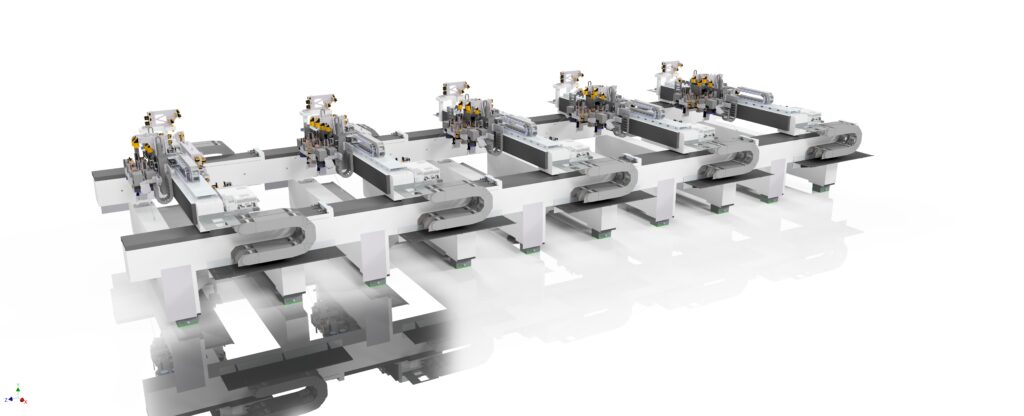
key advantages of laser material processing of square-meter sized areas

Quality
The laser as a wear-free and gentle tool; no cracks on the workpiece, no warping, and the highest precision over large areas
Large surfaces
> 10 m², modular design with a processing area of up to 2500 mm x 1500 mm each

Process acceleration
Parallel processing using multi-scanner and multi-beam machining

Economy
Reduced machining times enable cost-effective, repeatable machining
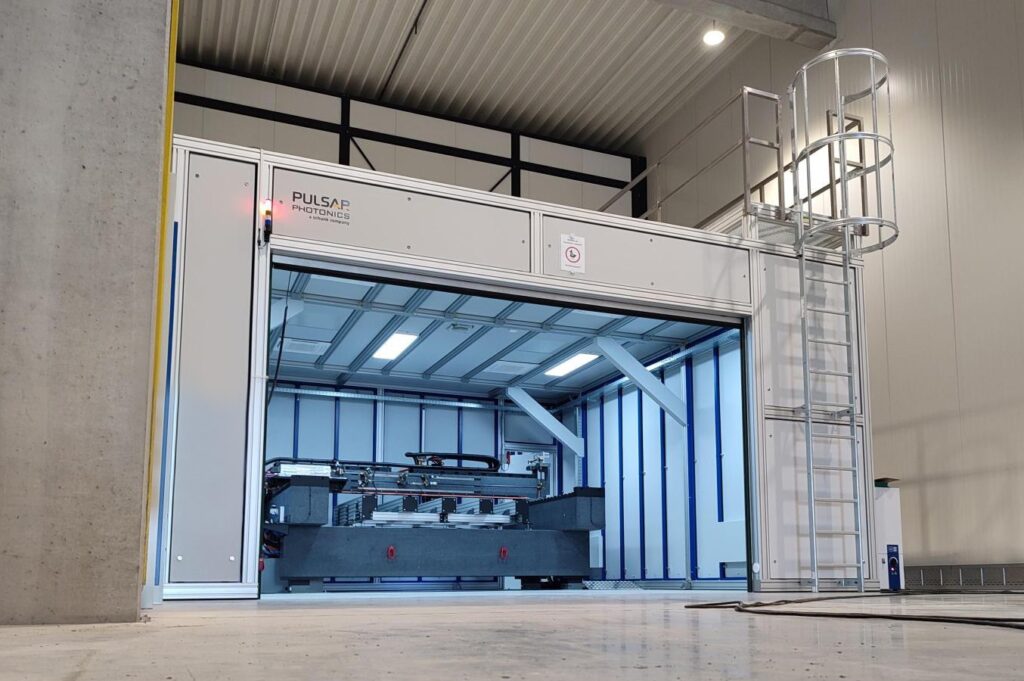
Machine solution:
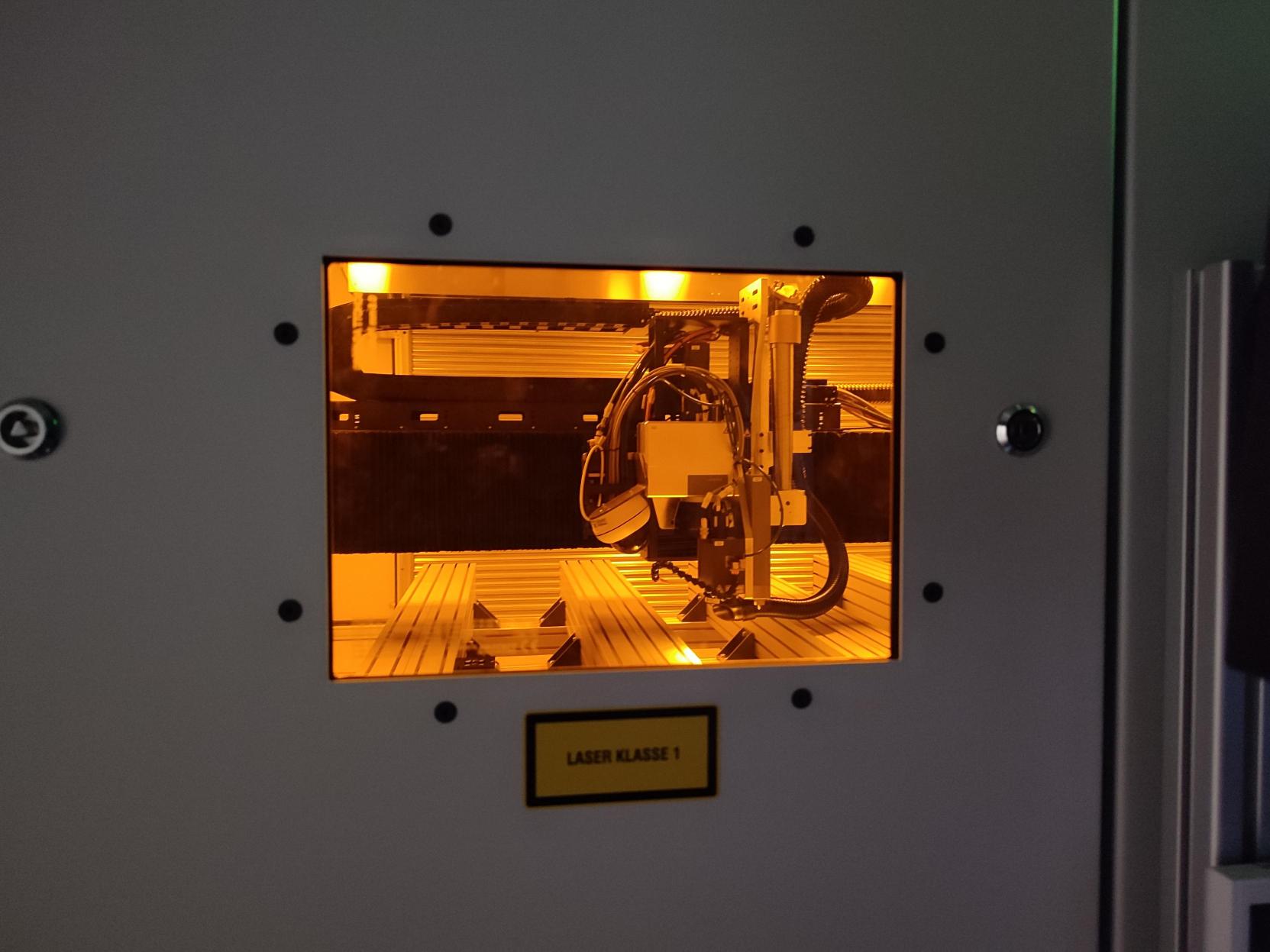
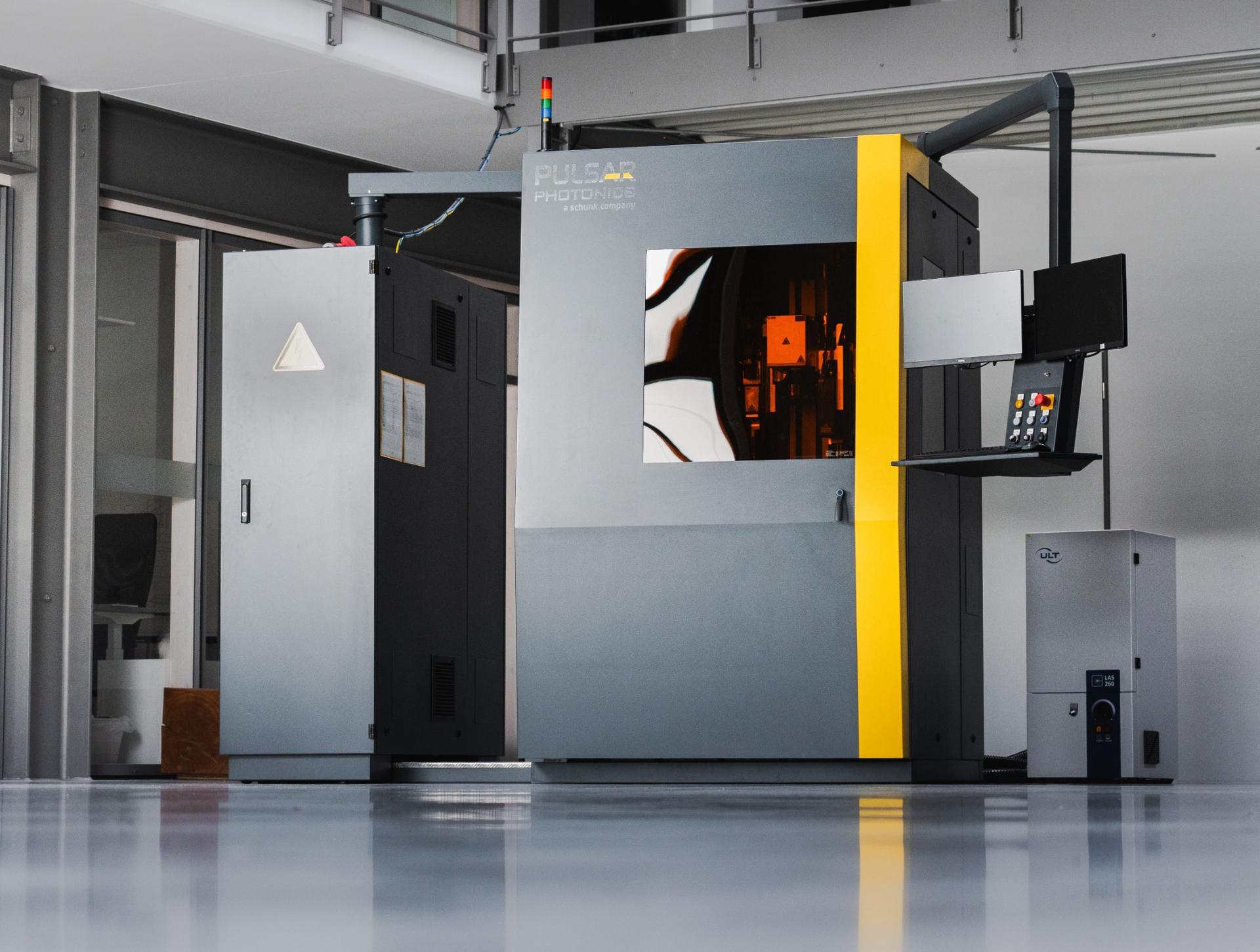
Laser Processing of Large Flat Parts with the RDX2800
A new technological approach is needed to perform large-area precision machining in a cost-effective and stable manner. The RDX2800 was developed specifically to meet these requirements: It combines high-precision laser machining with a system architecture designed specifically for large areas:
- Areas of > 10 m², modular design with a processing area of up to 2500 mm x 1500 mm each
- Speed & efficiency: Parallel processing with multi-scanner and multi-beam processing
- Cost-effectiveness: Significantly reduced processing times, cost-effective processing of large areas
- Precise and consistent beam guidance, highly dynamic axis systems
- Automated process control
- Stable processes with no wear
- Quality: Minimal thermal stress, no cracks, no warping
- Scalable production from prototypes to series production
- Intuitive and user-friendly software
For industrial applications, it is not only technical feasibility that matters, but above all reliable and cost-effective implementation in day-to-day production. The RDX2800 offers concrete advantages in this regard, addressing the key requirements of modern manufacturing.
Typical USE CASES & Materials
The RDX2800 is used wherever large surfaces need to be functionalized, textured, or precision-machined. Typical applications can be found in a wide variety of industries—from toolmaking to aerospace to battery manufacturing.
- Large-scale surface roughening and modification to prepare surfaces for bonding and coating processes
- Large-scale tool machining, e.g., for molding and forming tools, as well as for the paper, film, and plastics processing industries
- Reducing friction in tools or machine components
- Large-area micro- and nanostructuring for the production of functional surfaces
- Manufacturing of large-format screens for process engineering applications
- Surface modification for improved adhesion of coatings
- Machining of battery components, structuring of current collectors
- Precision machining of substrates and plates
- Interior design industry
- Tribological optimization of surfaces
Our Products & Services
Laser machines
Mechanical engineering for laser material processing. State-of-the-art laser systems for custom manufacturing and automated mass production.
Laser Contract manufacturing
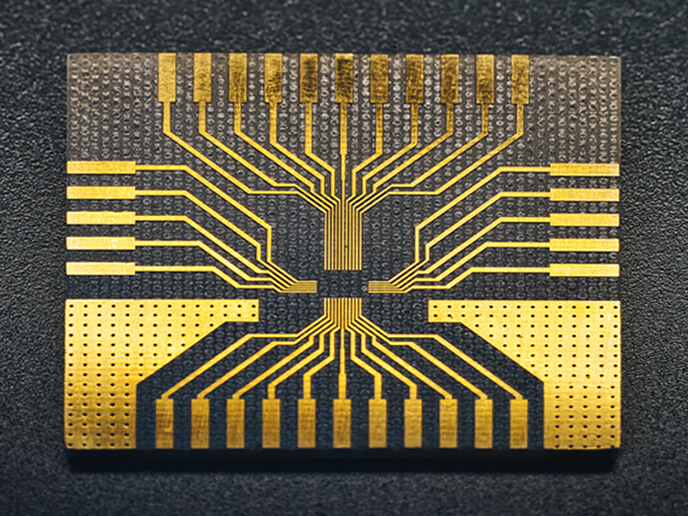
Component manufacturing and machining using ultrashort-pulse lasers. Feasibility analysis, process development, and contract manufacturing through to series production.
Feasability analysis & process development
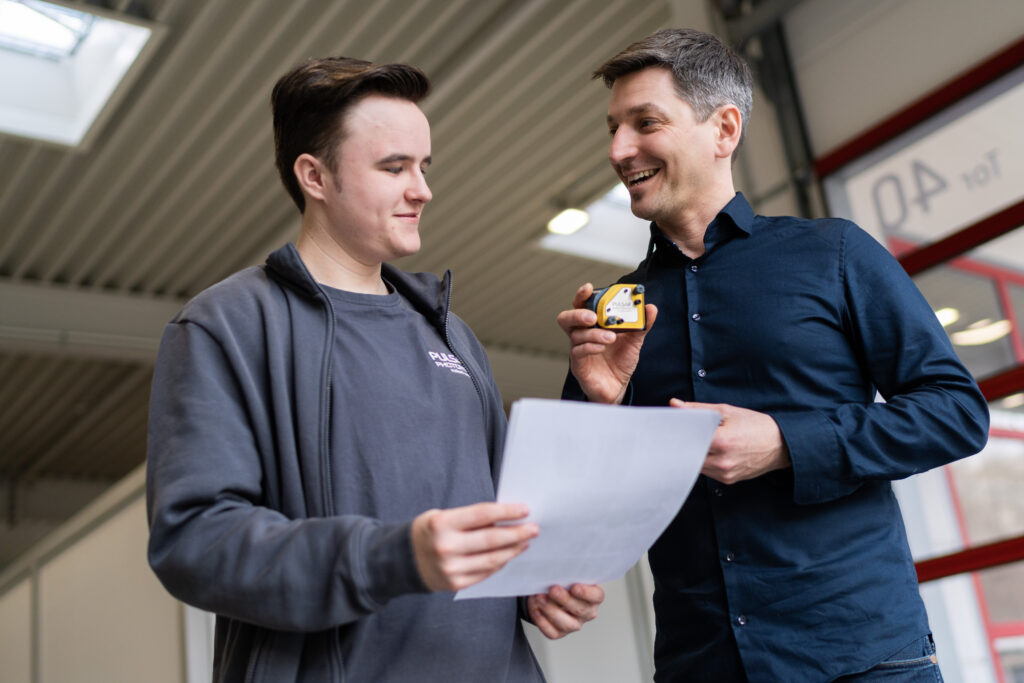
At the Pulsar Photonics Laser Application Center, structural designs and machining processes can be developed and tested in collaboration with customers.
- Feasibility studies for new applications
- Development and optimization of complex geometries
- Tests using actual components and materials
- Evaluation of quality, precision, and process stability
- Process validation prior to series production
You have a question ABout a product?

Your Contact Person for sales
Louisa Draack
Technical sales
The company: Why choose Pulsar Photonics?
- Extensive experience in laser micro-machining
We have extensive experience in developing industrial laser processes for precise microstructures and holes in a wide variety of materials - Development, automation, and systems engineering from a single source
From process development to the finished automated production system, we support our customers every step of the way toward industrial implementation - Process development in our own laser application center
New applications and components can be tested in our laser application center and further developed in collaboration with customers - Solutions for industrial series production
Our systems are specifically designed for stable processes, high-volume production, and integration into automated production environments
